DoorDash2026

Unlockingorderfulfillmentfornewverticals
DoorDash has historically focused on restaurant merchants, but in 2026 began accelerating their “new verticals” business lines, which included everything from retailers, grocers, florists, and more.
The focus on restaurants meant that order fulfillment tools for these new verticals merchants had stagnated from underinvestment, and therefore posed a strategic risk as DoorDash pushed to scale these markets.
My role & impact
I owned the end-to-end design of the merchant new verticals order fulfillment experience, leading to the creation of a cross-platform experience that unlocked significant new merchant TAM, unified disparate experiences across 3 brands, and has so far shown a directional +15% relative improvement in order quality and a 2% absolute reduction in cancellations.
The existing experience used by DoorDash’s new verticals merchants was a scrappy, pieced-together tool that was originally intended for restaurants – and had a very high cancellation rate of 5.36%.
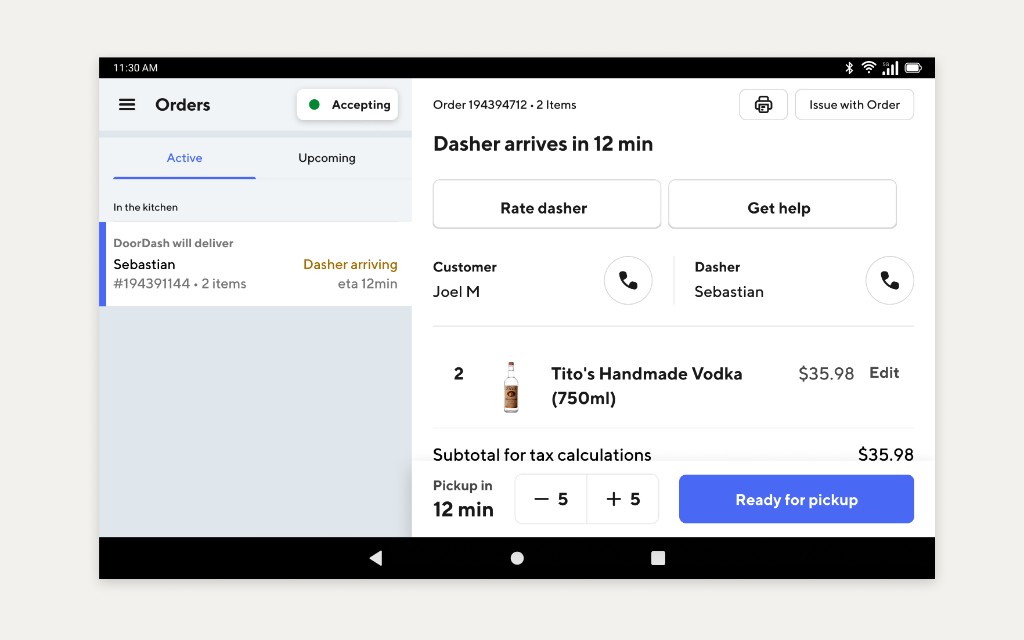
The existing experience only supported tablet, a less-than-ideal form factor, and had not been updated in years.
Its lack of basic functionality meant that growth had stalled, as the types of merchants it could reliably serve was limited. The majority of merchants using our order fulfillment solution were smaller alcohol/convenience stores (~70%). In the next phase of growth, the real goal was to be able to sell the solution to larger grocers and retailers.
The new experience prioritizes accurate fulfillment of every item, introducing barcode scanning and quantity confirmation steps.
The largest sources of order quality defects stemmed from out of stock items and incorrectly picked items. Scanning helps the merchant ensure they’ve got the right item, and additional hints like visual quantity confirmation make sure they’re picked the right amount.
When something’s out of stock, the merchant needs to quickly resolve it according to the customer’s preferences.
The customer preference is clearly communicated to the merchant, allowing them to continue fulfilling the order. Successful substitutions lead to higher order quality than refunds, so we try to guide the merchant to making the right decision at each stage of the picking process.
I leaned heavily into AI-assisted prototyping, using native iOS and iPad prototypes to test how the experience felt and to bring it to Merchants.
Much of the design process took place in prototypes, which allowed for rapid iteration, the ability to plug into device-specific functionality (like camera access for scanning), and to test it with merchants.
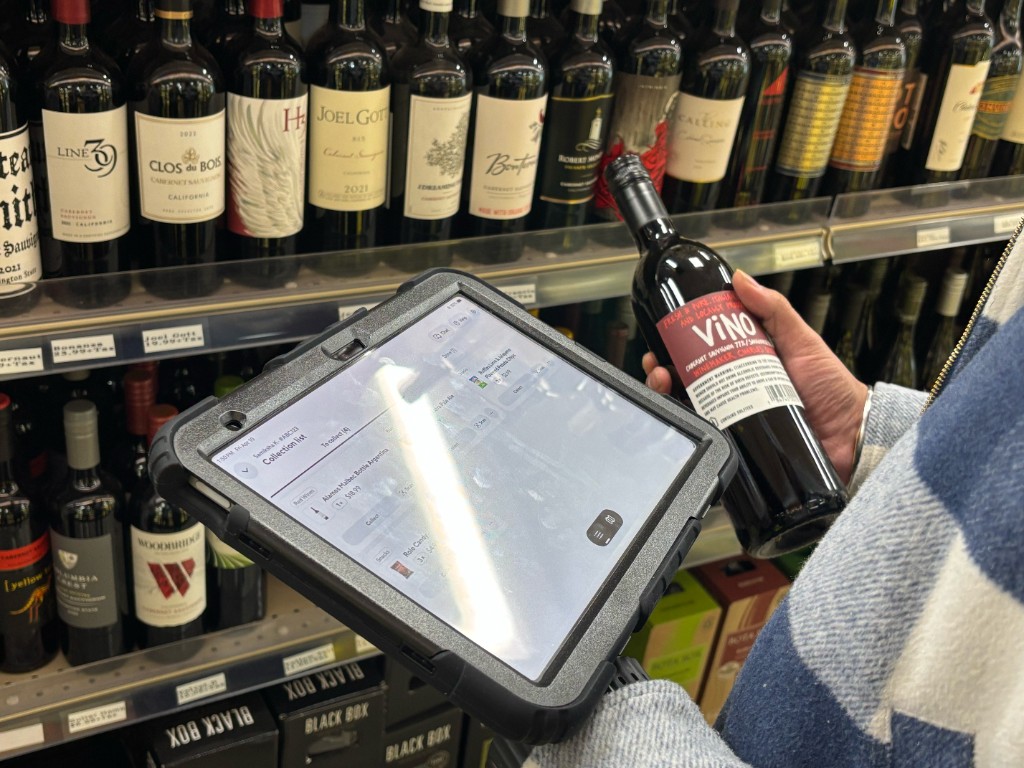
I conducted merchant visits to test the experience on tablet and mobile with store employees.
AI prototyping was also immensely helpful for testing with merchants in their stores. I devised a system that allowed me to pull real item information from their stores, making the experience feel real.
This is the tip of the iceberg! Simultaneously, I led the charge on unifying this experience across DoorDash and its two recently acquired companies, Wolt and Deliveroo.
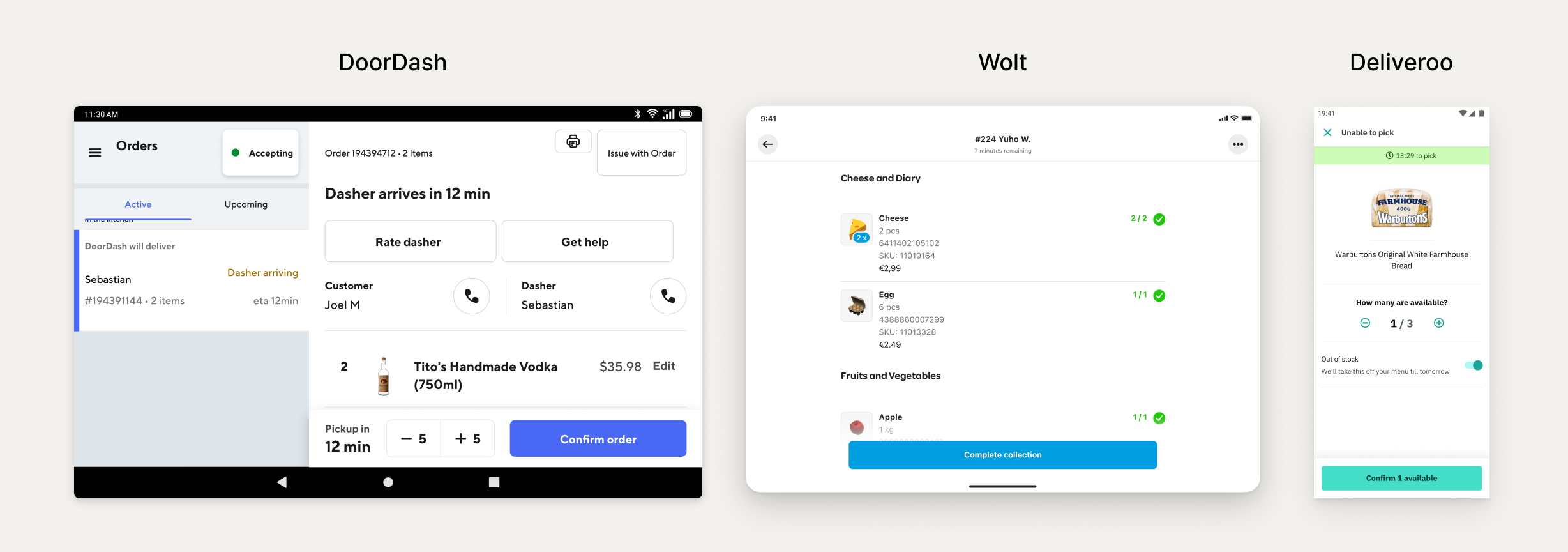
Each brand had a different experience with varying maturity levels and supported form factors.
These acquisitions had just begun transpiring into a strategic initiative to combine our merchant-facing tooling into a single unified product that could serve DoorDash’s global merchant base. I won’t go too deep into it here, but would happily discuss the added complexity and challenge of designing for a global merchant base.
Interested in learning more about this project?
This is just a part of this project and the process behind it. I’m happy to share more about it in a conversation or portfolio presentation.
Email copied!